
This is my second post on Zagreb. It was my first time to Croatia and I was there for seven days. I have two other posts on my trip as follows:
A 24 hour Itinerary for Zagreb
A day trip to Plitvice Lakes and National Park
This post is targeted at travellers who spend several days in Zagreb. I thought Zagreb was a great city to walk around, it felt very safe for a solo female and the cafe culture is fantastic. It’s also cheaper than other European capital cities like London, Vienna, Dublin, Budapest etc. But it’s more expensive than the two Balkan capitals I have visited so far : Pristina in Kosovo and Tirana in Albania.
Zagreb, the capital of Croatia, is situated in the North of the country close to the Slovenian border. It has a population of approximately 800,000. Croatia is a member of the EU and the Euro is its currency.
Zagreb has 17 city districts and an interesting mix of modern and older buildings. It has two distinctive areas – the historic upper town and the 19th century lower town.
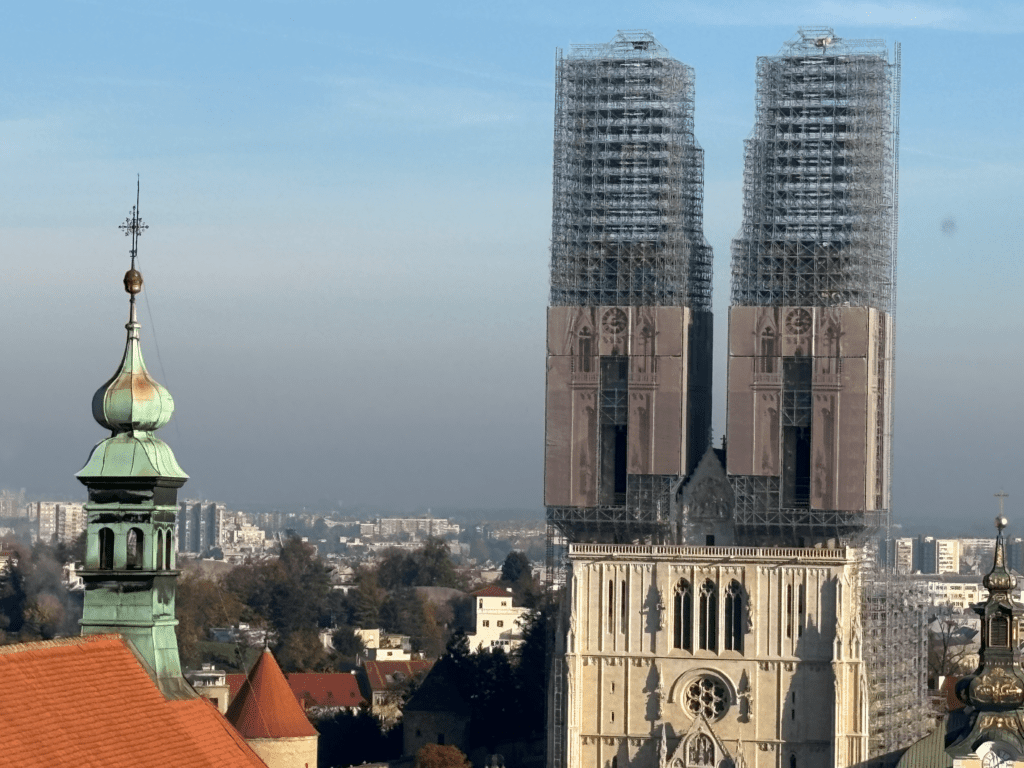
In 2020 an earthquake measuring 5.5 on the Richter scale caused a significant amount of damage to many of Zagreb’s historical buildings. Scaffolding and cranes were visible across the skyline as the city continued its restoration works. Unfortunately, the cathedral, several churches and museums were not open due to these renovations, when I visited.

If you have read any of my other posts you will know that I love museums. I enjoy historic, cultural and artistic ones. I also love quirky themed ones. Zagreb certainly has its share of those but I have to admit I didn’t think all were worth visiting.
To follow is an overview of all the places I visited, in addition to what I described in my 24 hour itinerary.
Museum of Broken Relationships
When I goggled museums in Zagreb, this always came up in the top 3. I was intrigued by the name and I presumed it was about the conflict in the Balkan region. How wrong was I !
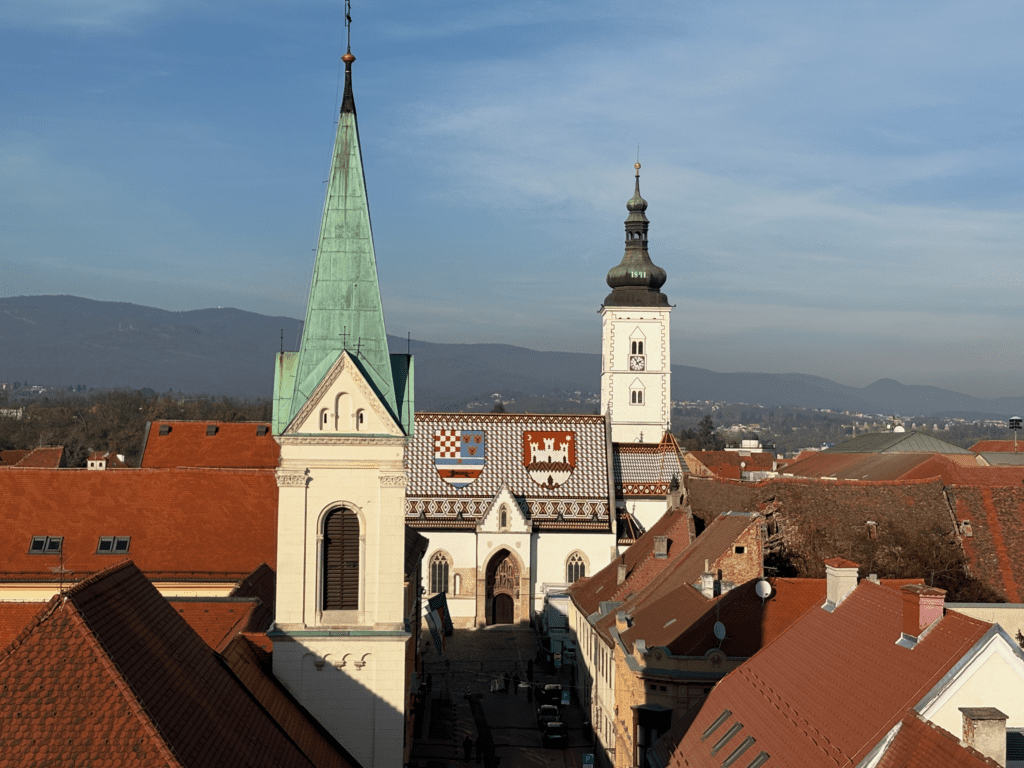
The museum is situated a stones throw away from St. Marks Church – probably the most famous building in Croatia. It’s the one with the distinctive Croatian flag in tiles on the roof.
The entrance fee was €7.00. You could leave your coat on a rail near the reception. So as to the theme of the museum – it has nothing to do with Zagreb or Croatia. It’s a museum where people from all around the World have submitted stories and memorabilia about “broken relationships”. Written testimonies with artefacts associated with the stories form each display.
The exhibitions which stood out to me included the following:
- A person leaving a job as a customer service agent
- A group of English people touring EU countries prior to Brexit
- A selection of table mats sent by a young girl to her Mother when she was imprisoned
- A love letter from a gentleman to his wife after she was diagnosed with dementia
- A piece of ginger from the first meal a young person made. They died in a car accident the day after making it
I spent about an hour walking around, reading the signs (which were in English and Croatian) and looking at the exhibitions.
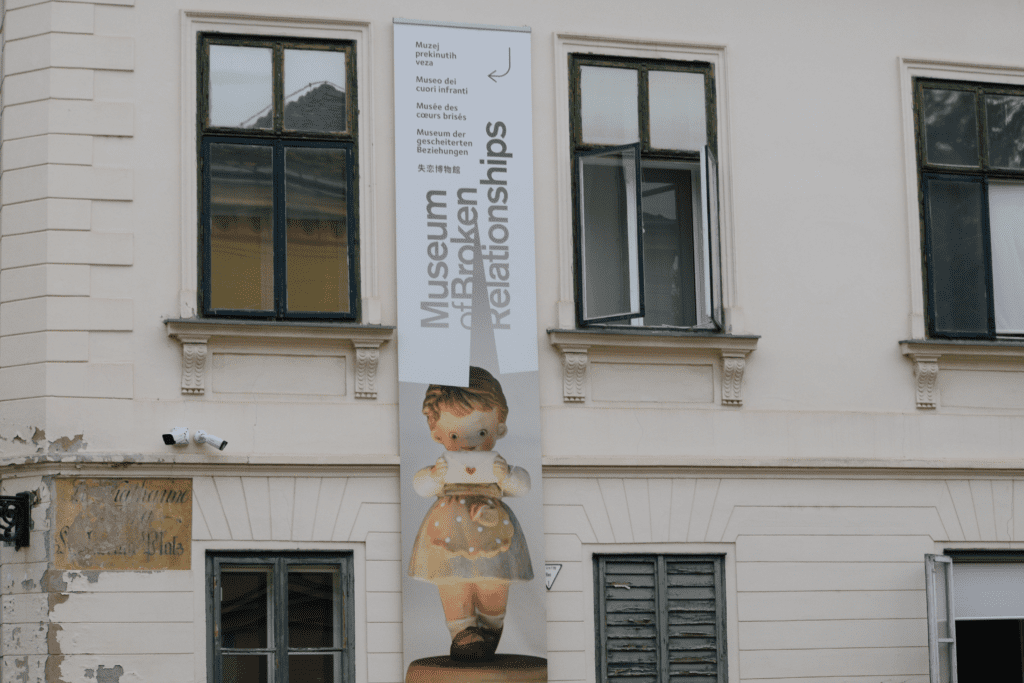
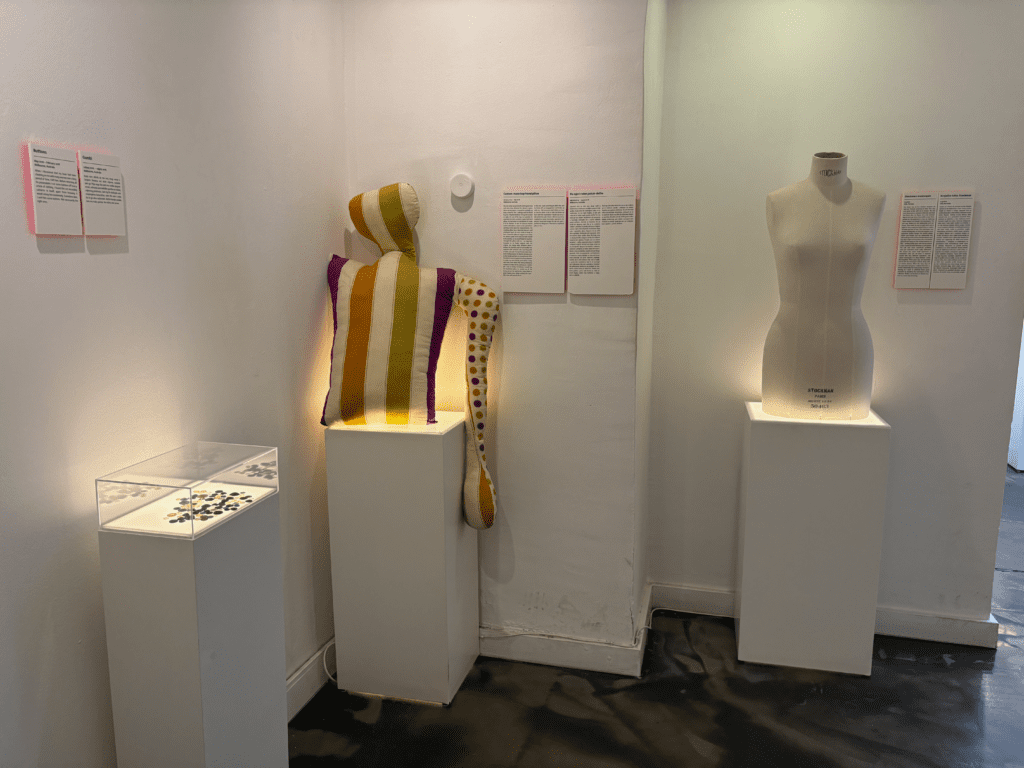
This museum opened in 2012 and in 2017 had over 100,000 visitors. The founders have brought this to several other cities including Tokyo, London, Paris and San Francisco.
Do I recommend this museum ? Not really. I didn’t think it was the best use of my time on my first visit to Croatia. However, if it is touring where you live, it’s worth visiting. But if you want to learn about Zagreb, this isn’t the museum to visit.
Lotrscak Tower
I mentioned this tower in my 24 hour itinerary as this is where the canon is shot from at noon every day. The distinctive tower overlooks the city and the fee to visit inside is €3.00.
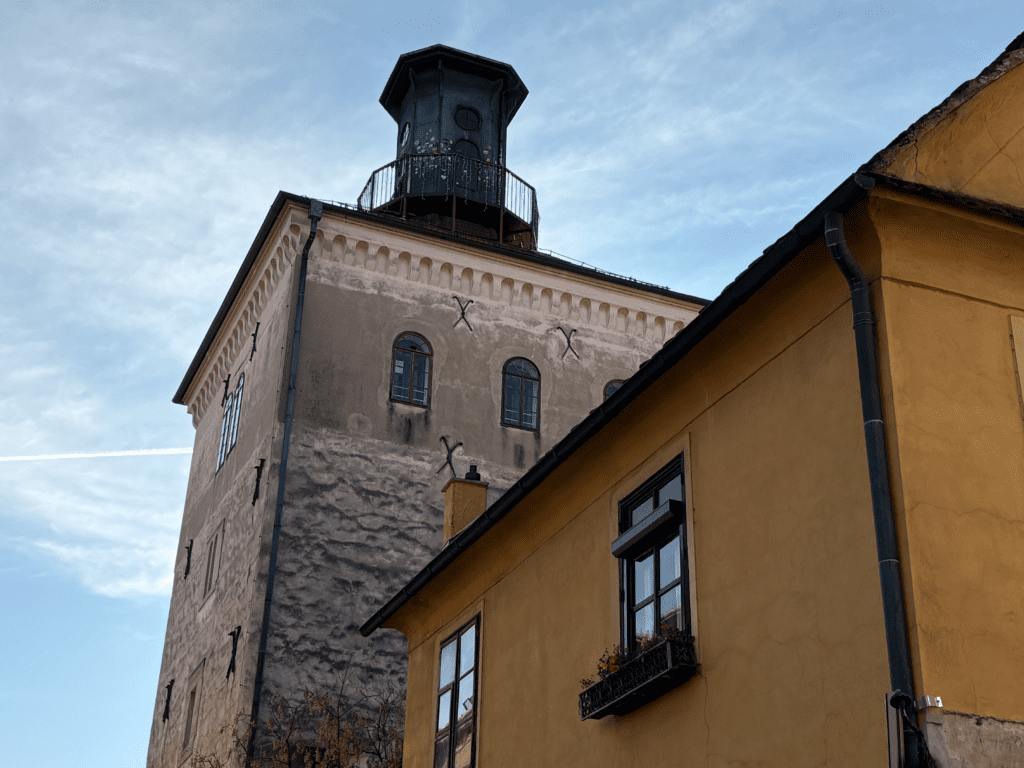

After purchasing my ticket I was directed to a door which led into a small courtyard. 24 steps took me to another outdoor area and an additional 41 to the first floor. Several large black and white photographs, of Zagreb, were displayed here. There are three large windows on this floor but as you are not up very high, the views are limited.
58 steps took me to the next floor. The view from the 3 windows here had certainly improved. You do get a unique glimpse of St. Marks Church as you are so close to it. The layout was the same here and again some photographs and signs were displayed.
Then 75 steps took me to a larger area with 5 windows. This is also the canon room. While the canon is enclosed in a glass area you get a good look at it. Some great history on the canon is displayed here. They have been shooting this (to tell the locals the time) since 1877. They stopped from 1914-1927. A new canon, made in Switzerland was first used in 1928. This cost 3,800 dinars (dinars was the currency in Croatia until 1994). One extremely interesting fact is that only 4 people have been responsible for shooting it since its inception. The current gentleman was 30 when he started in 2000 – making him the youngest. His name is Alex Tolundzic and I would hope he continues for many years.
An additional 115 steps took me to the observation deck. The stairs were a lot narrower in this section and just suitable for one person at a time. This was certainly worth the climb. The panoramic views of the city are amazing. I was glad I was in the city for several days and could visit when it was sunny. It had been extremely cloudy on my first few days.
Do I recommend this museum ? Absolutely ! This was one of the highlights of my time in Zagreb. I loved seeing the canon up close, learning more about its history and the panoramic view of the city is amazing. While you can rest at each level I don’t recommend this if you have any issues with climbing stairs or if you don’t like enclosed spaces. However, it’s rare anywhere in Europe to pay €3.00 to visit such a unique, local place.
Mirogoj Cemetery
Several years ago when travelling with my late Father, he suggested going into a cemetery when we stopped in a small town. At the time I challenged him, saying it was really morbid. He laughed and told me you can learn a lot about the area from the cemetery. I now completely agree and regularly visit cemeteries in towns and cities. Of course there are some very famous ones in large cities due to the celebrities or historical figures buried there.
I walked to the Mirogoj Cemetery on my second morning in Zagreb. It took about 35 minutes to walk from Ban Josip Jelacic – the main square. I really enjoyed the walk as it took me to areas I would never have visited otherwise. The route was quite flat and apart from one section, which was a lane through a small secluded field, I was walking through residential or commercial areas.
The outside of the cemetery has several large buildings around it. You couldn’t enter any of them but the architecture is really striking. There was a sign inside the gate identifying where historical figures are buried. Very few of the names were familiar to me so I decided just to walk around and not head in any specific direction.
As my Father told me, you see the common surnames of the city immediately. You also see the age profiles of when people passed away. It was a Saturday morning and there was lots of people visiting graves and either cleaning and/or placing flowers. The majority of the graves are very well maintained. There were lots of extremely beautiful headstones and statues. It was clear that this is multi-domination as statues were from several religions.
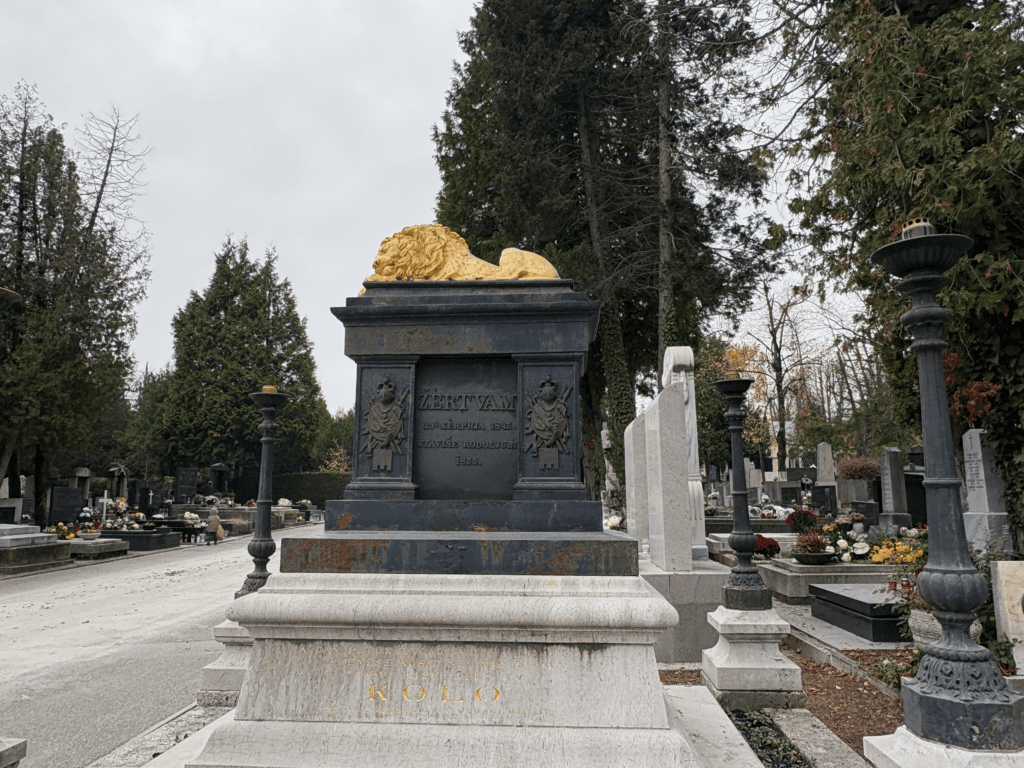
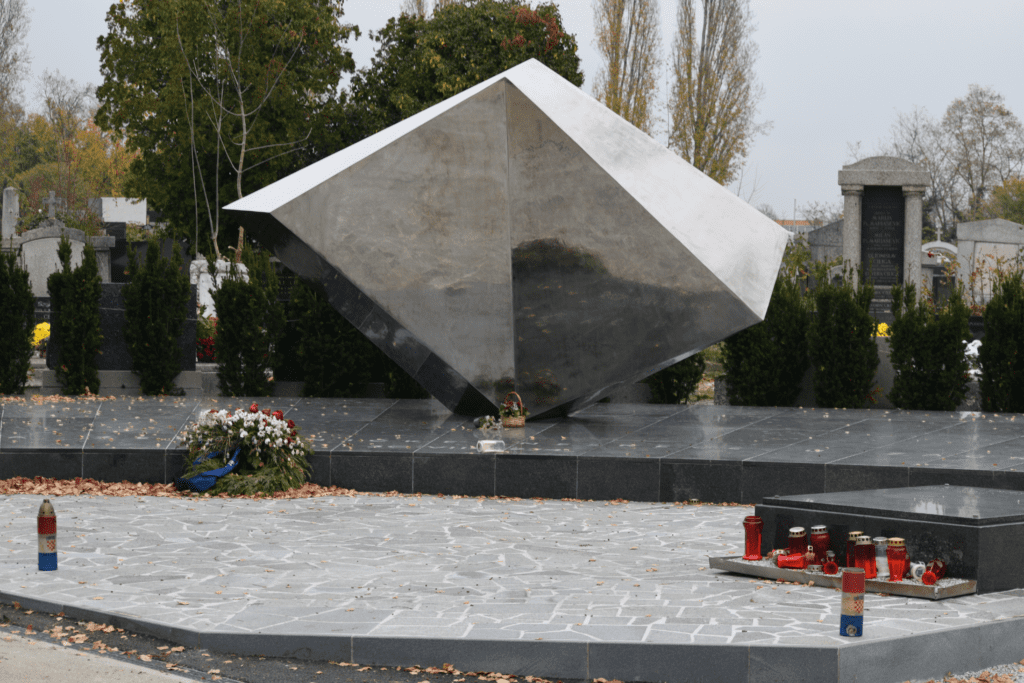
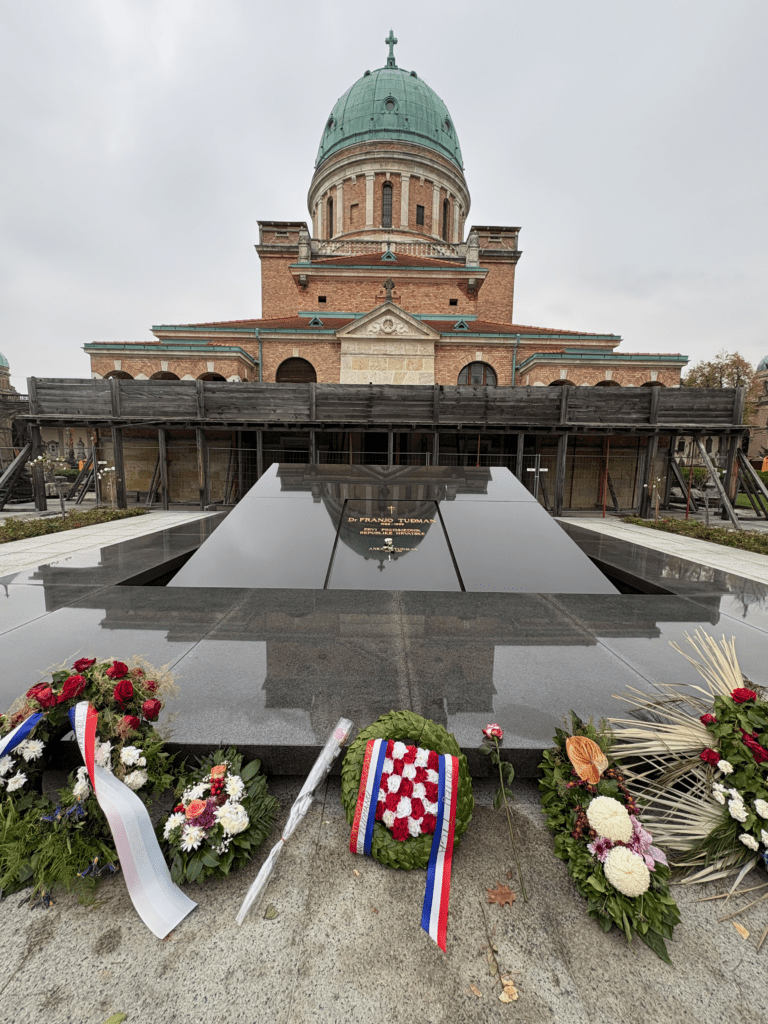
One of the largest graves is that of Dr. Franjo Tudjman. He was the first president of Croatia and served from May 1992 until he died in December 1999. While I was by the grave several elderly gentlemen came by. They looked like normal residents and I was extremely struck by their reverence and the respect they showed. Clearly they thought a lot of Tudjman and while I know very little about him, I loved the fact his grave is in such a beautiful place.
I walked around for about an hour and felt this graveyard must be extremely important to the residents of Zagreb. I was really glad I visited.
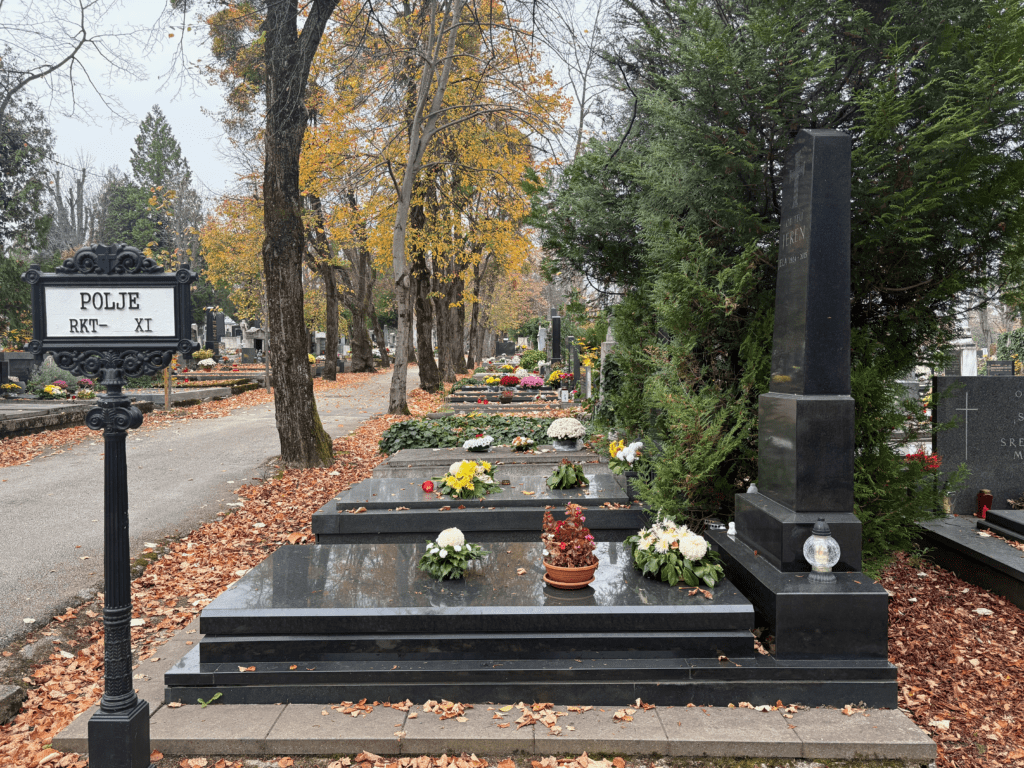
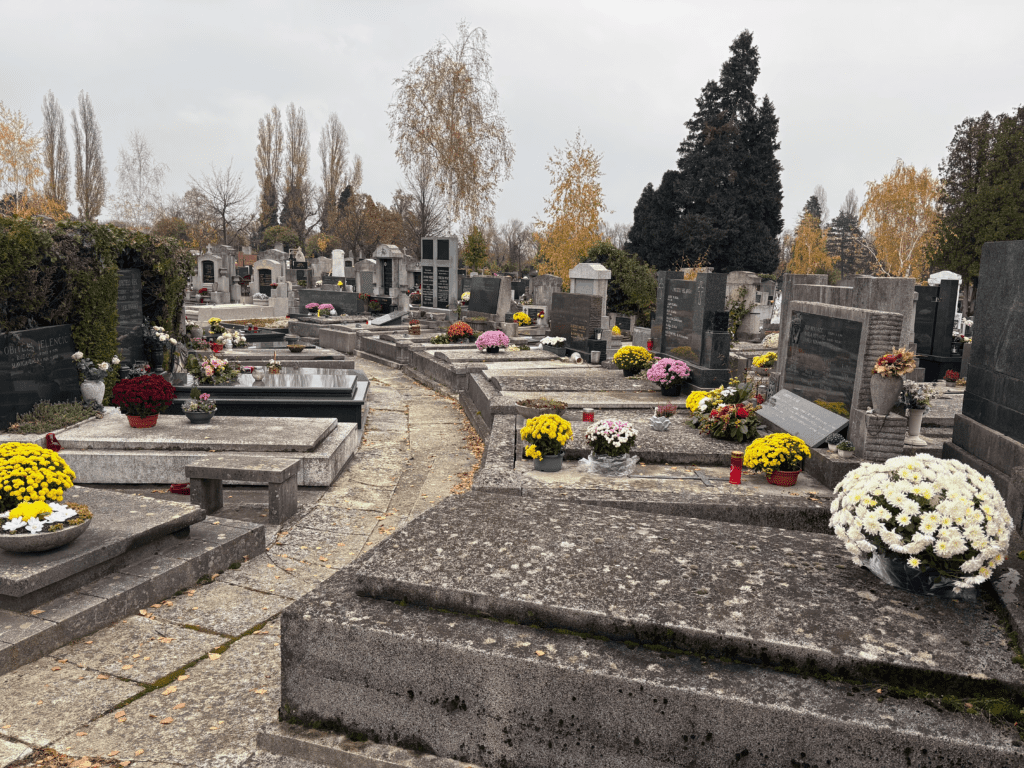
Do I recommend visiting here ? Absolutely. It’s a unique place with historical significance and I really enjoyed the walk. The 203 bus stops outside so that’s also an option to get there.
Tesla Museum
After a 20 minute walk from the main square, through a commercial district, I arrived at the Tesla Museum. The entrance fee cost €6, which seemed cheap in comparison to some of the other museums. The museum itself is situated in a large warehouse. When I walked it, I was greeted by a very friendly attendant who told me what section to start on and also pointed out the lockers where I could leave my bag and coat.
This museum is huge but only a small section is devoted to Nikola Tesla. I didn’t know that Tesla was born in Croatia so I was delighted to get to visit his museum. I then spent about an hour walking around. The signs are excellent and are multi-lingual. The sections I enjoyed the most include :
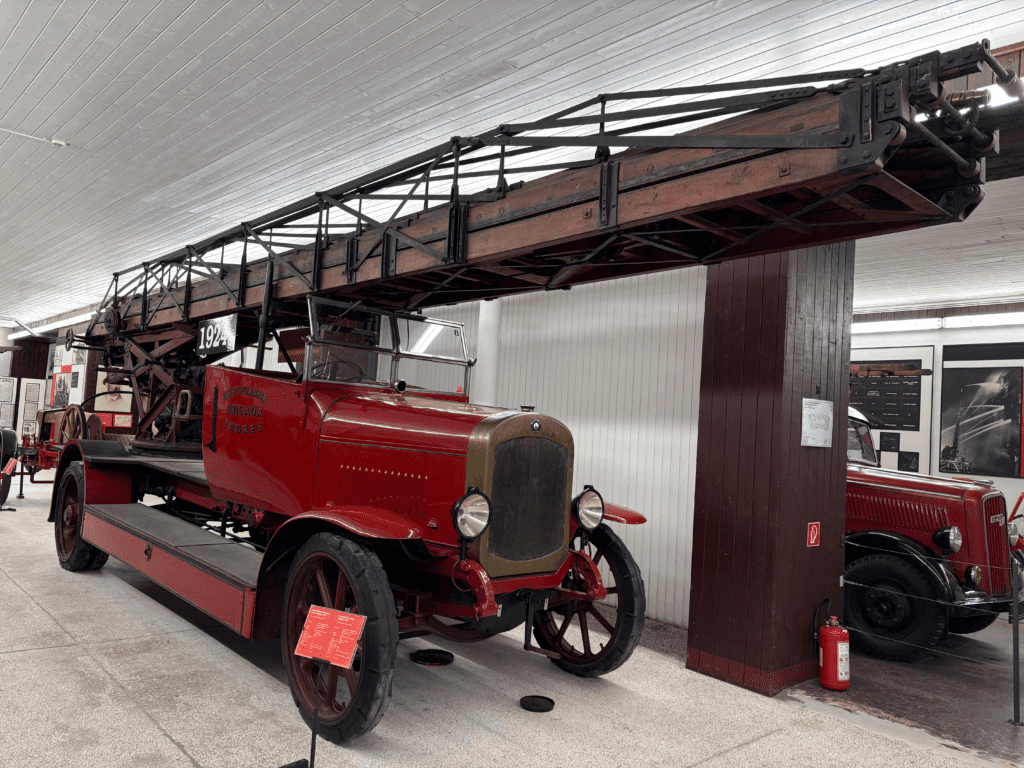
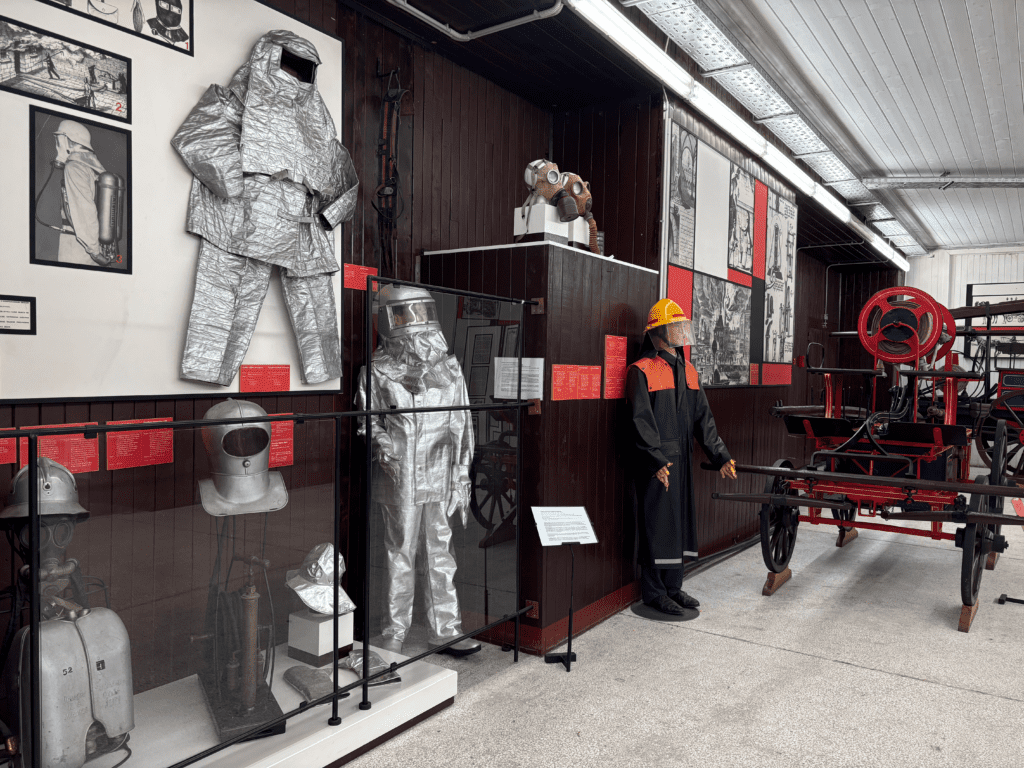
Fire department : this had an amazing selection of fire engines from the 19th century to the modern day. It also had a large amount of paraphernalia including sand buckets, water pumps, ladders, hoses and protective clothing.
Inventions : an excellent timeline from 1629-1896 showed when lots of inventions were completed and by who. It also described what was successful and what wasn’t.
Boilers : I felt quite a geek when I started reading here as what could possibly be interesting about a boiler? Yet I found myself enthralled learning about how all the various boilers worked and their impact on the environment.
Drilling / mining section : this showed what mining has occurred and where in Croatia throughout the years.
Tools : This included a wonderful model of an oil rig. Signs explained where Croatia had purchased its oil from 1854.
Oil and Gas Fields : I didn’t know there were gas fields off the coast of Croatia but apparently there are. The first one was identified in 1917. A detailed sign explained how important these are to Croatia and to the EU. A very informative display explained how much oil is in modern cosmetics and I found myself taking notes on products I plan to avoid in the future.
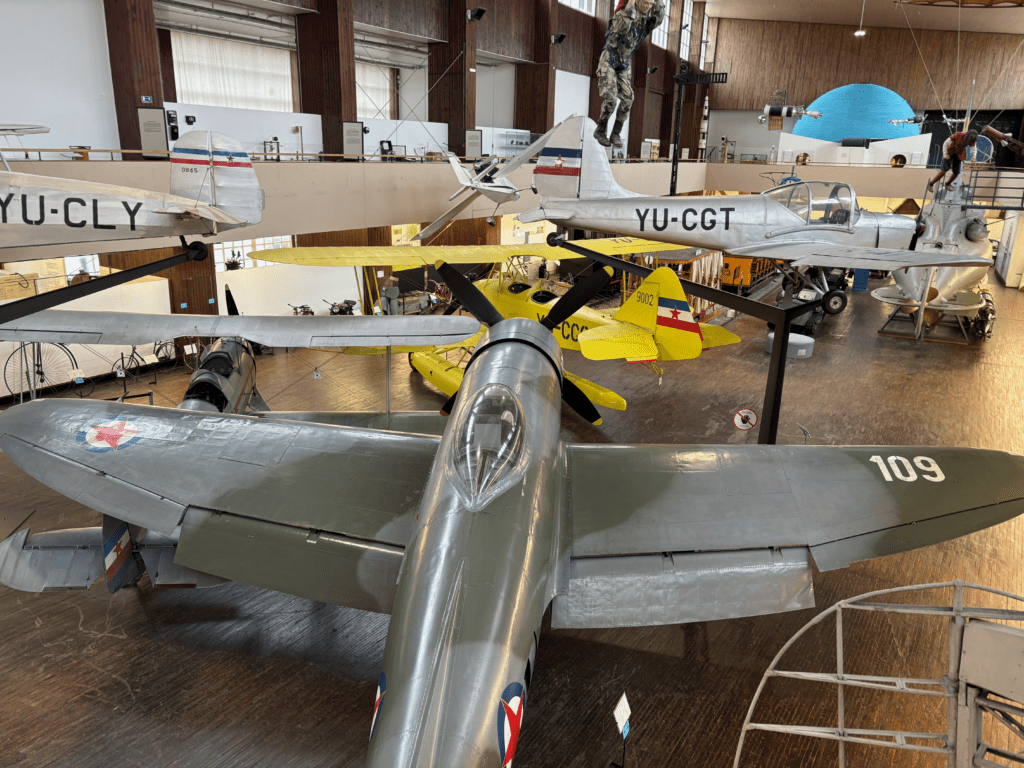
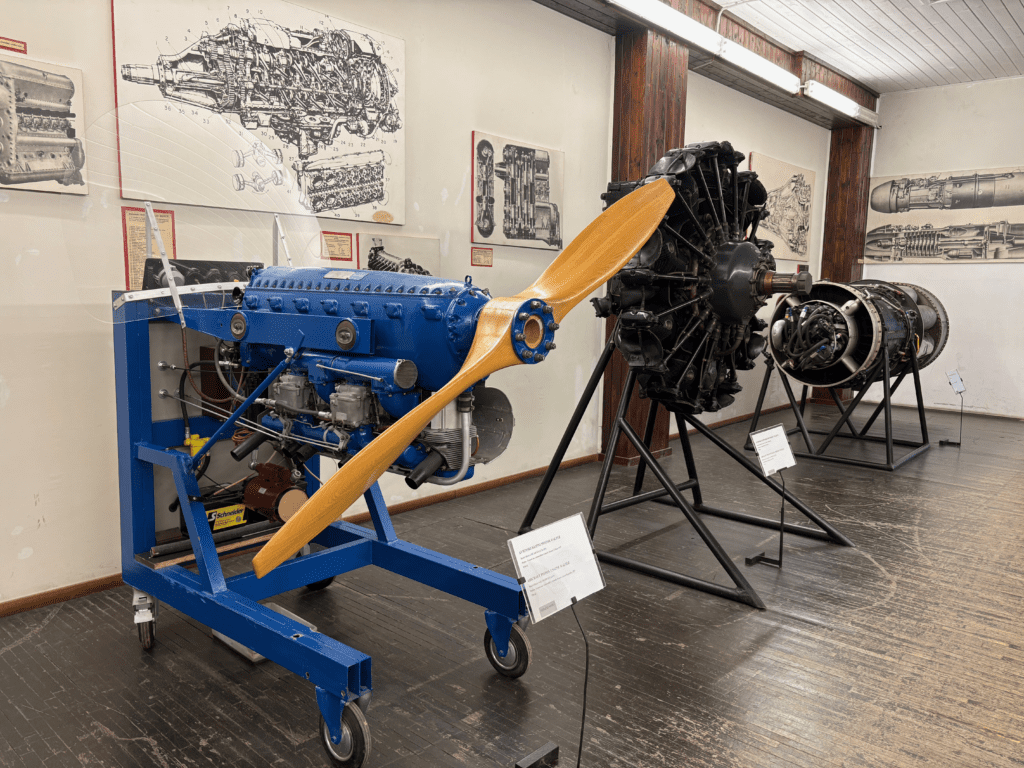
Transport : A large section of the museum includes an array of helicopters, planes, train carriages and trams. Again my inner geek came out as I really enjoyed looking at these.
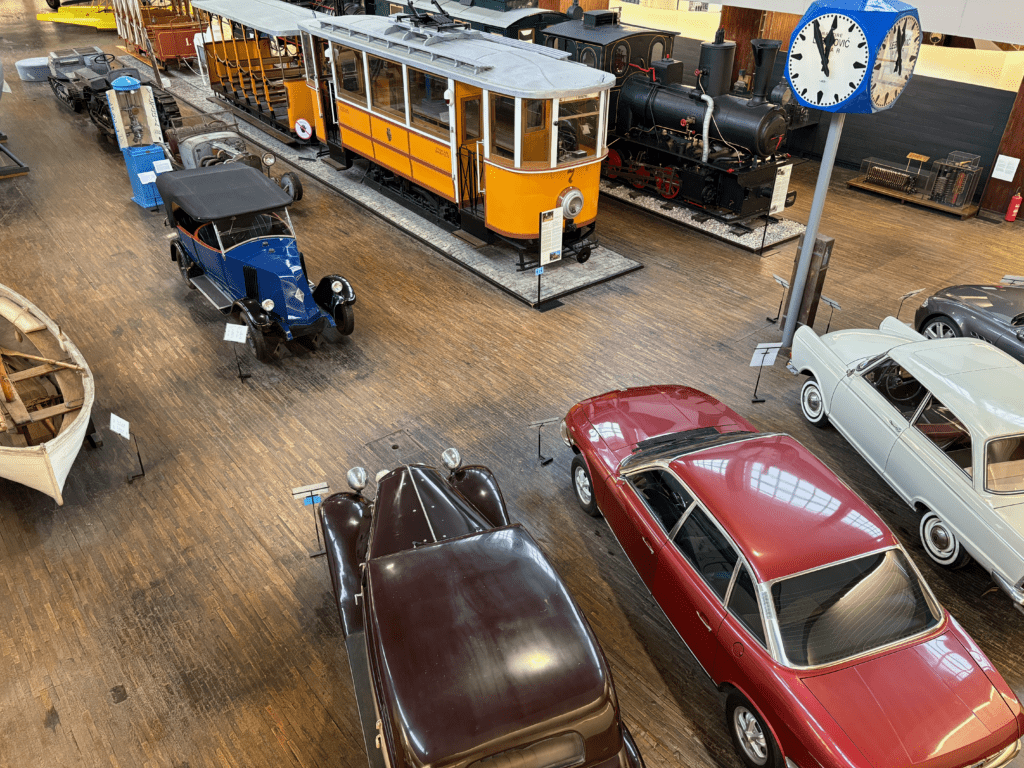
Section dedicated to Tesla : To the right of the downstairs area is a section all about Nikola Tesla himself. The back of it has tiered seats so I presume lectures are held here. The other side is divided into 3 sections showing Tesla’s inventions. Signs outline key events in his life. I didn’t know he had cholera at a young age and also considered going into the priesthood. A video, in English, was constantly playing which explained his inventions. A crater on the moon has been named after him but of course most of us will now associate his name with electric cars !
I then went upstairs but the signs were only in Croatian in the first section. I really would have loved to understand it as it was about renewable energy – a topic I am quite interested in.
The remaining section included a large display of equipment. It had everything from household appliances to sewing machines, record players, typewriters and computers.
A building looking like a giant igloo is located at the end. It’s a planetarium and there are shows held there periodically. Unfortunately nothing was starting soon so I didn’t get to go inside.
Do I recommend this museum ? Yes, particularly if you are interested in technology or transport. I also thought it was extremely good value. I spent over 90 minutes here and the time flew by. One suggestion I do have for you, if you visit during the winter – don’t leave your coat in the locker as it’s extremely cold inside.
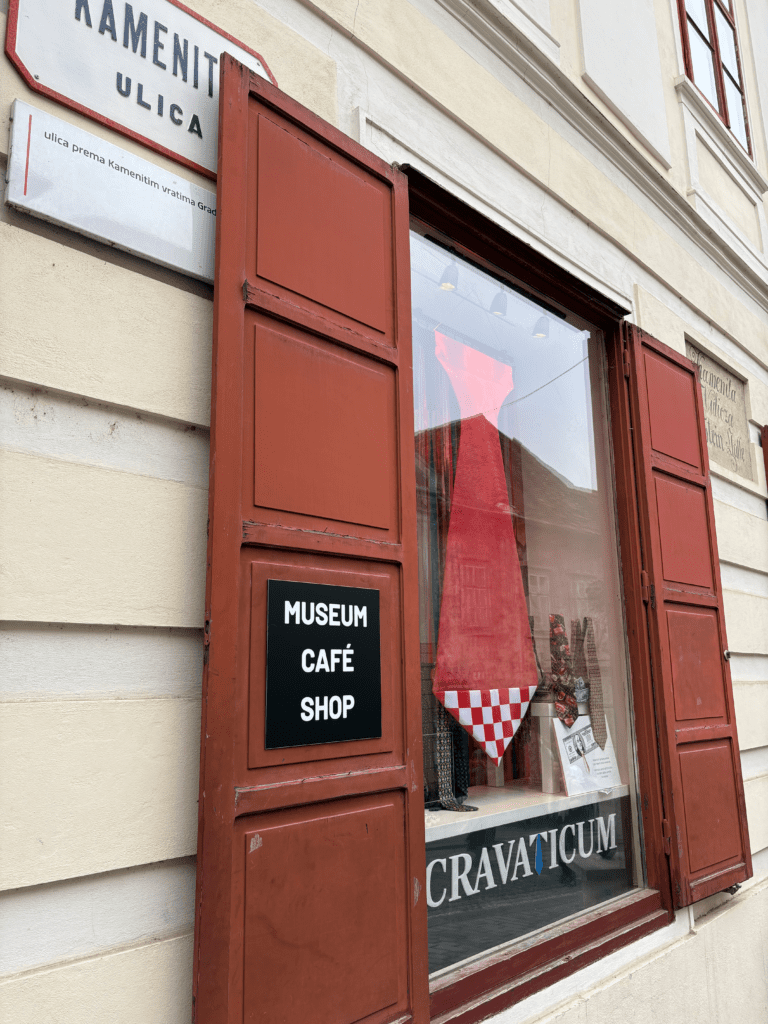
Cravat Museum
Did you know that Cravats were invented in Croatia ? I didn’t and always presumed they were French. “Kravata” means necktie in Croatian and October 18th is International cravat day.
The museum is a stone’s throw from the Stone Gate and costs €9. They have a cafe which you can visit without going to the museum.
This museum is extremely small. The first display explains that it takes 110 silkworm cocoons to make one tie ! Cravats were first worn by Croatian soldiers from 1618.
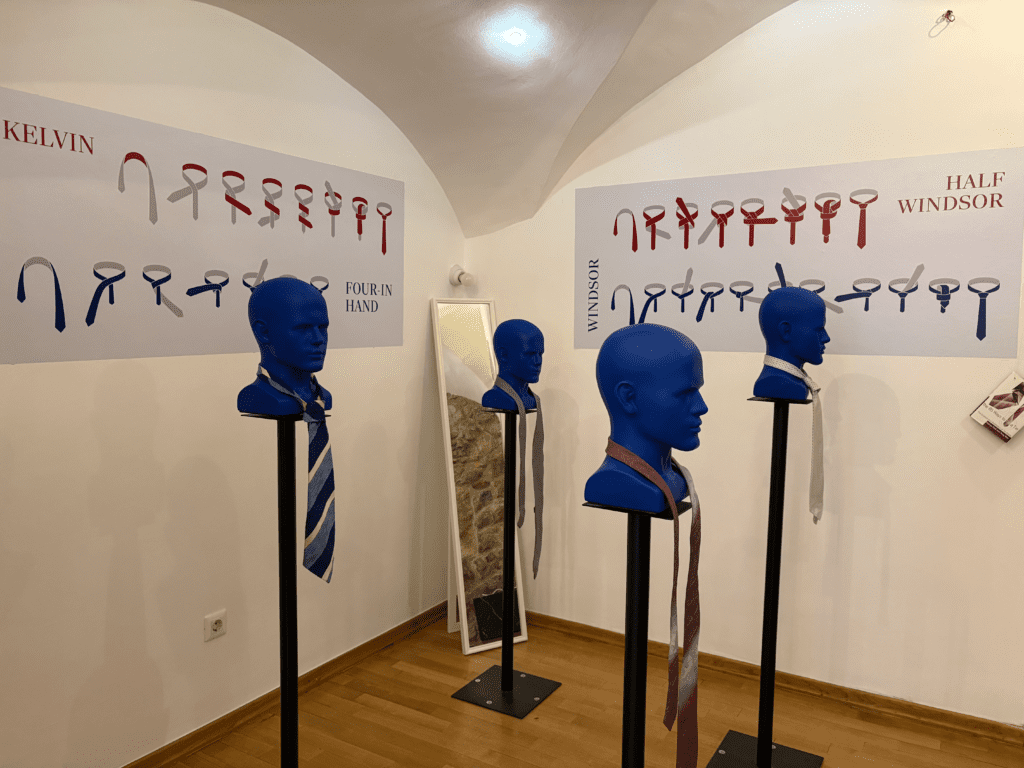
There are lots of displays and the signage is extremely detailed. You can learn about the largest tie ever made, see a bizarre snakeskin one and learn how to tie a necktie. Apparently there are 177,147 ways to make a tie but only 4 are commonly worn. Detailed pictures explain how to tie these 4 and there are mannequins where you can complete each one (2nd image below). I was in the museum alone but I wondered what it would be like if it was crowded.
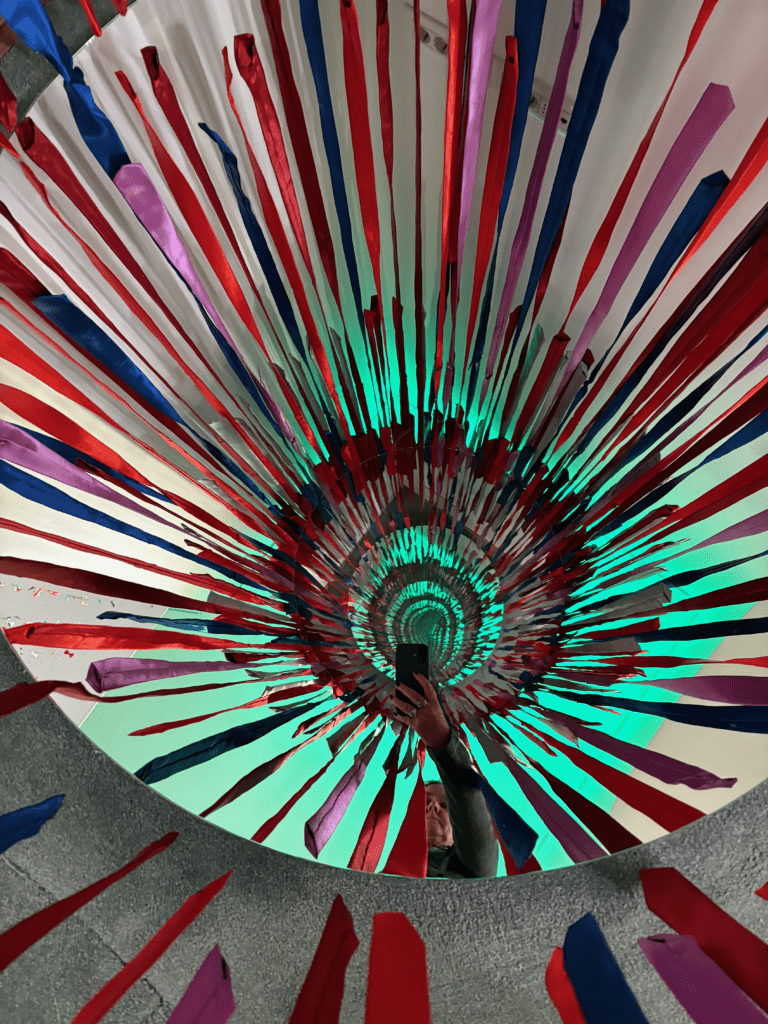
A visual of ties hanging does allow a good photograph opportunity (3rd image below).
Do I recommend this museum ? It wouldn’t be in my top 5 and I think it’s expensive. I spent about 15 minutes, reading every sign, completing each of the ties and taking several photographs. It is a unique piece of Croatian trivia though and it will appeal to lots of people. There were some jigsaws and games for children also.
The 80’s Museum
It took me a while to find the door to this museum. It’s situated across from the statue of Saint George, on horseback and is also near the Stone Gate.
The entrance fee is €8.00. As soon as you walk in you will see it is extremely cluttered. A very friendly attendant, sitting behind a desk in a cramped space, brought me into a large room. He explained that I could pick up any of the artefacts, play music cassettes, try on clothes and generally do whatever I wanted. The main room was like an 80’s living room with everything that you can imagine from that era. This included a TV, record player, drinks trolley, cabinets, books, beverage bottles etc. Clothes were hanging on racks but I resisted the urge to try them on.
I played several songs on the cassette recorder. While I remembered they have 2 sides, I did forget to rewind the first one I played. I was amazed at the selection of tapes they had. Listening to Suzanne Vega’s ‘Luca’ brought back some memories !
The next room contains an orange formica kitchen. Bottles, cans and packets of popular food items were displayed as well as kitchen gadgets.
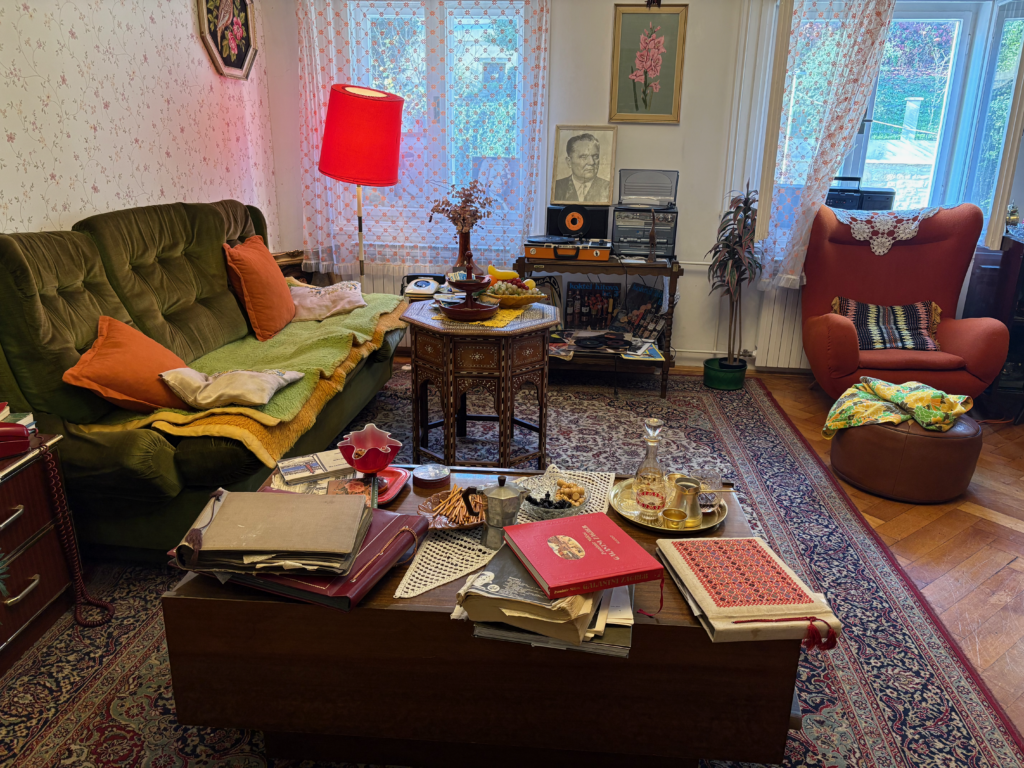
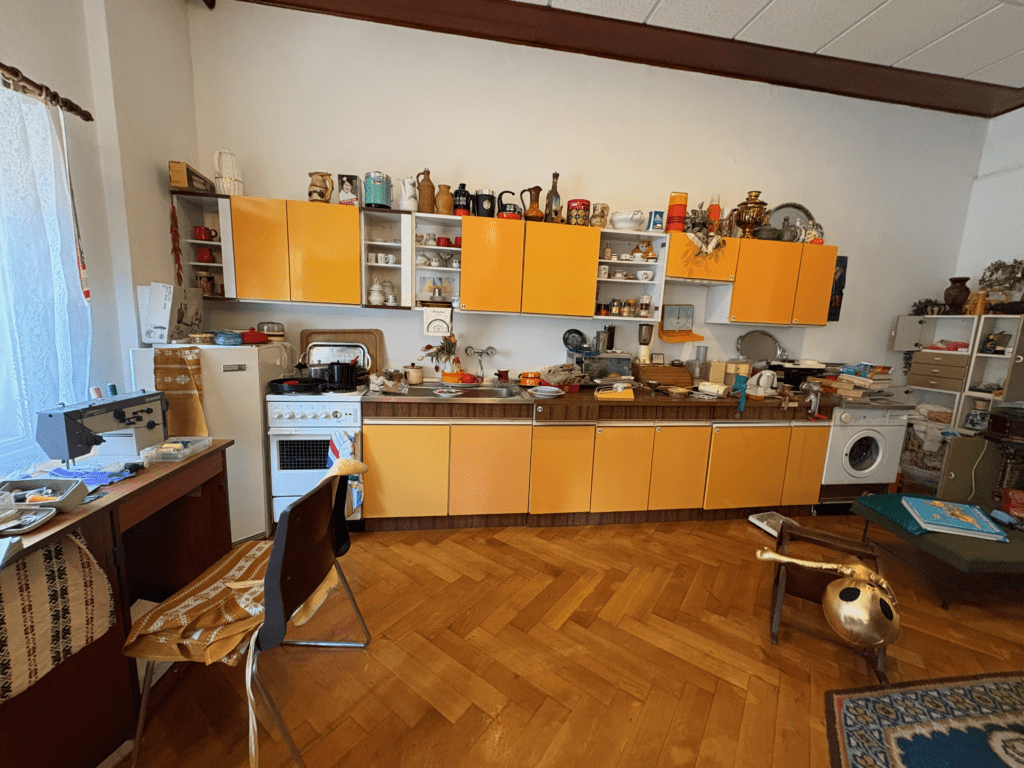
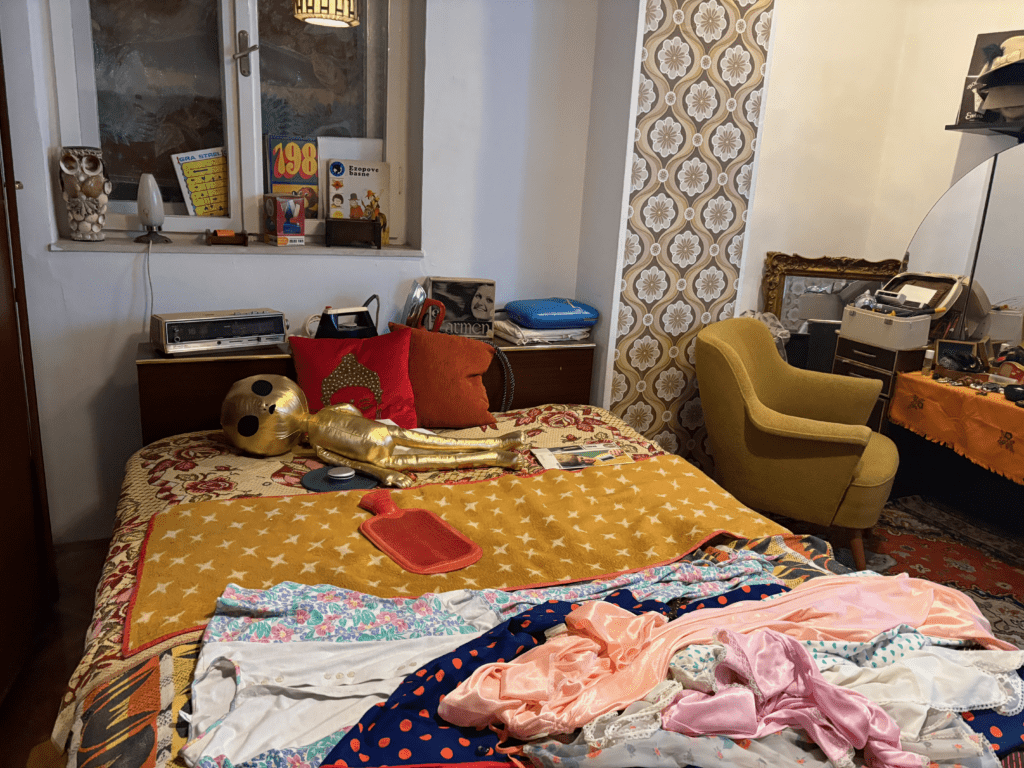
You then walk through a small hall and to the right is the bedroom. However a couple were in there and I felt as if I disturbed then. They seemed to have taken the attendant at his word and were in an amorous embrace on the bed. The lady was dressed in some vivid 80’s clothes.
I backed out immediately and found something else to engross myself as they left with their heads down in embarrassment. I just had a quick look in the bedroom then as it did feel a little seedy. Again from the bedding to the furniture, to the items displayed on the dresser everything was typical of the 1980’s.
I then went back to reception and there is the front section of a small yellow car with luggage on the roof. Again it was exactly as the images you see from the 1980’s portrayed on TV etc.
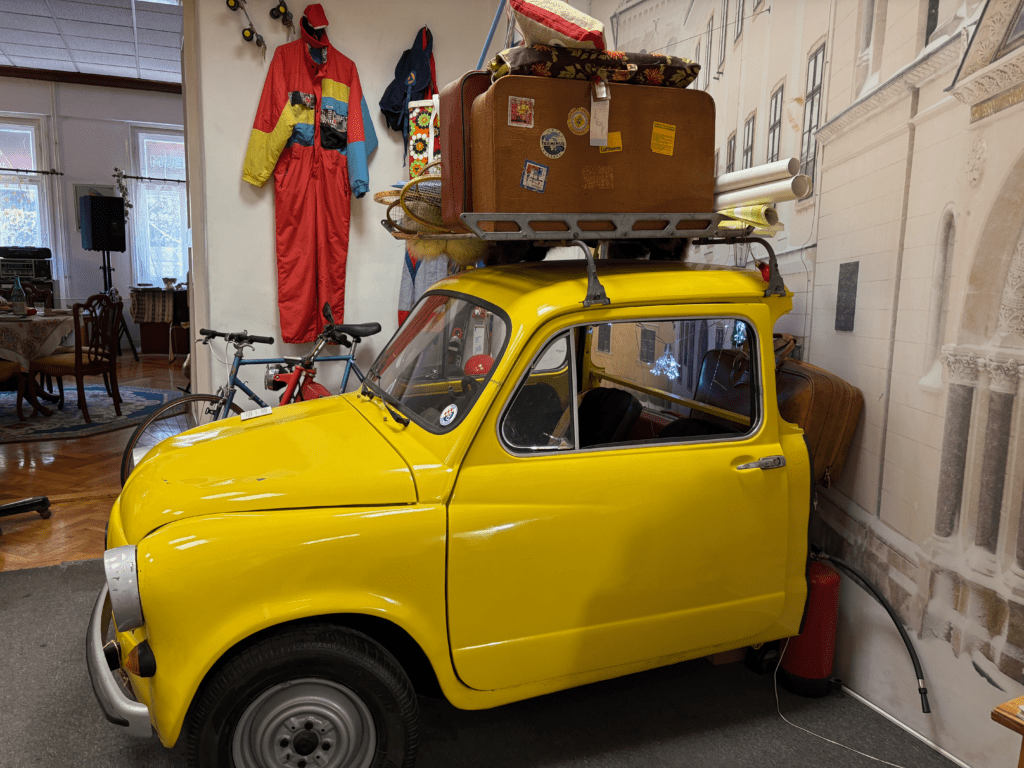
Do I recommend this museum ? I really enjoyed this apart from walking in on the creepy couple. I spent about 45 minutes here and it certainly is a great place to visit if you remember that era. Younger visitors may get a kick out of the memorabilia.
Museum of Travel Experiences
The entrance to this is just off Ban Josip Jelacic – the main square. It’s on the ground floor of a modern building and there is a bookshop at the front. You purchase a ticket in the museum gift shop, on the right hand side. The entrance costs €12.00, which is more expensive than most of the other museums in the city. You enter the museum, opposite the gift shop, via a turnstile where you validate your ticket.
The first floor outlines why most people travel and says the main categories are to explore, to work and for adventure ! I immediately thought they could combine exploration and adventure, in the modern day, so I was intrigued. Large signs, in multiple languages, give examples of these reasons. Over to the side are some 3D headphones and you can watch a video of the carnival in Venice. You really feel as if you are walking straight through the parade.
The second floor has several cardboard structures, which you stand under. You can see a panoramic view of the display. Some are better than others. I really liked the one on Plitvice Lakes but thought the Space one wasn’t great. Other ones are about Croatian produce including Kotjevo wines and olive oil.
You then walk down a staircase which has images projected on the walls, floor and ceilings of scenes from Chicago, Tokyo, Toronto and Dubai. The visuals are very good and you can sit on the stairs and watch them as they change.
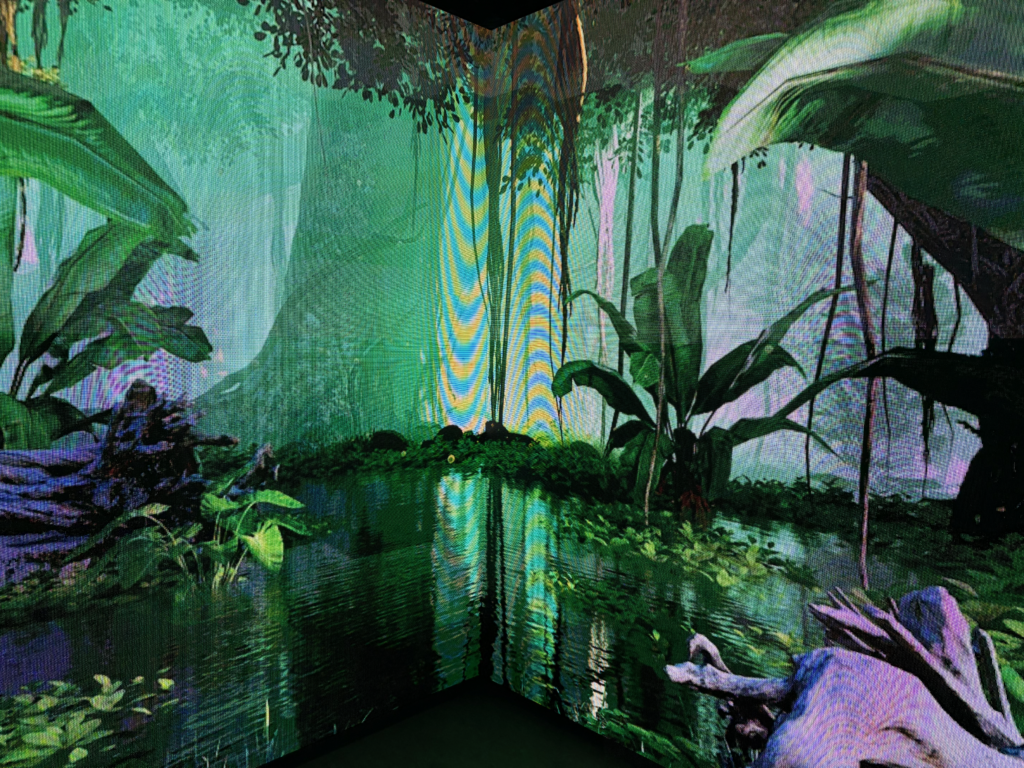
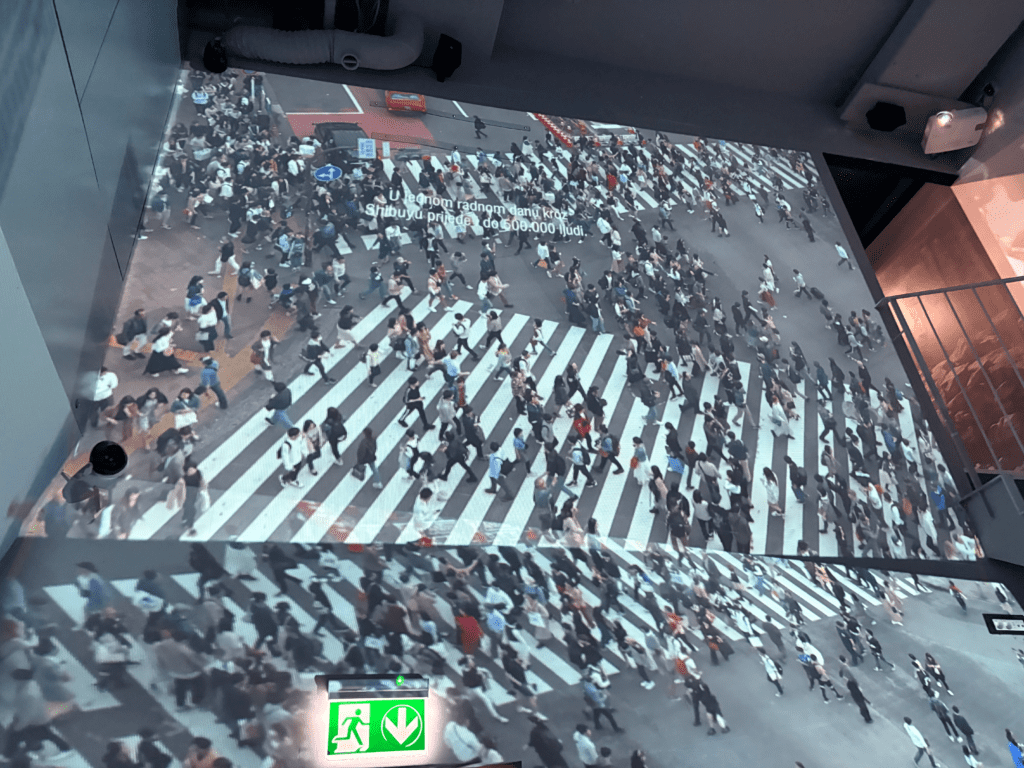
I spent about 45 minutes in the museum and a very friendly young attendant greeted me and pointed out certain features.
Do I recommend this museum ? I think it’s quite expensive for what it is. If you are in Zagreb for a long stay and, like me enjoy photography, you will love it. However, if you are short on time or are budgeting, I wouldn’t include this in your itinerary.
The Chocolate Museum
I debated whether I would go to this museum. While I love chocolate I have been to chocolate museums before and they usually have the same format i.e. you learn how to make chocolate and about famous chocolatiers.
I arrived in the morning and there was a large group of school children going in. An attendant was holding the door for them and I asked her if this was a good time to visit. She said they had 3 groups of young children due and suggested I come back at 3pm when they expected it to be very quiet. I did as she suggested.
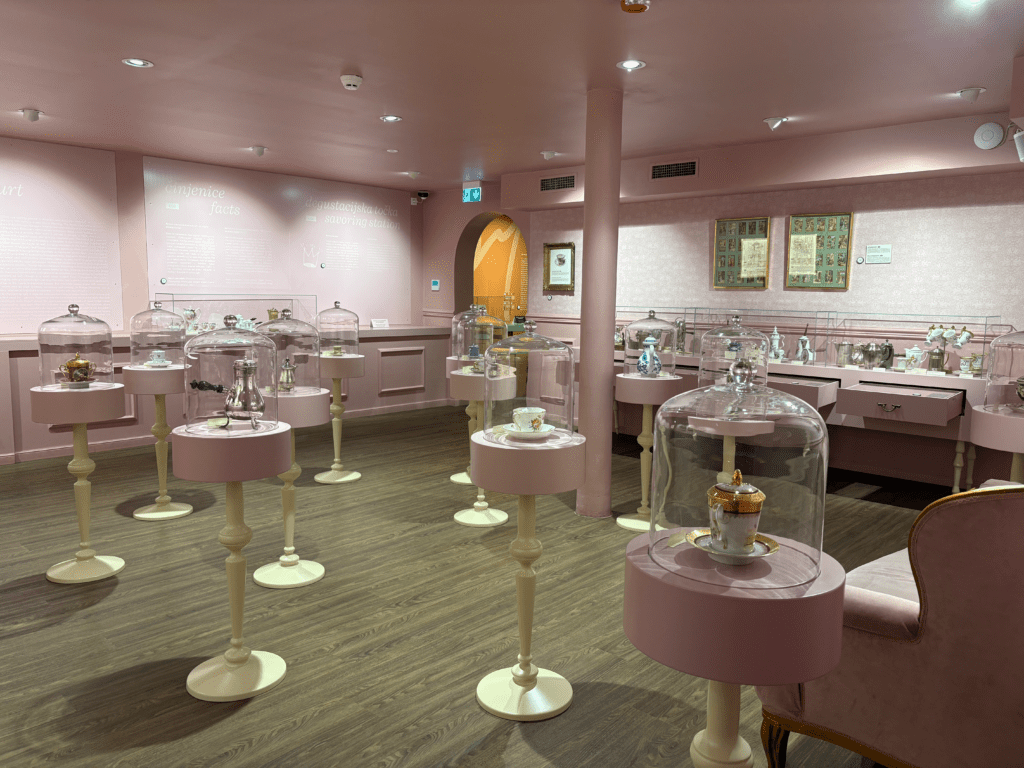
Now as soon as you walk in you will notice that pink is the predominant colour. After paying the entrance fee of €10.50, I was given a small cardboard box (image 1 below). I was told that this contained 7 samples of chocolate. Each one is associated with a different display and the attendant advised me to be careful eating the first one. He said it’s a raw cocoa bean and is quite bitter.
The museum has 7 different areas. Each one traces the history of chocolate from when cocoa beans were first discovered in a rain forest in Ecuador to the modern brands we are all familiar with. Extremely detailed signs explain everything but the glare from the ceiling lights did make some sections hard to read. I learnt a lot and loved how informative everything was. Did you know that at one stage cocoa and chocolate was a valuable commodity traded between countries like oil is traded today?
In each section you are told when to taste the piece from your box. The signs give you an idea of what to expect and they were very accurate. In one room you learn about how drinking chocolate evolved and there are lots of pots and cups displayed.
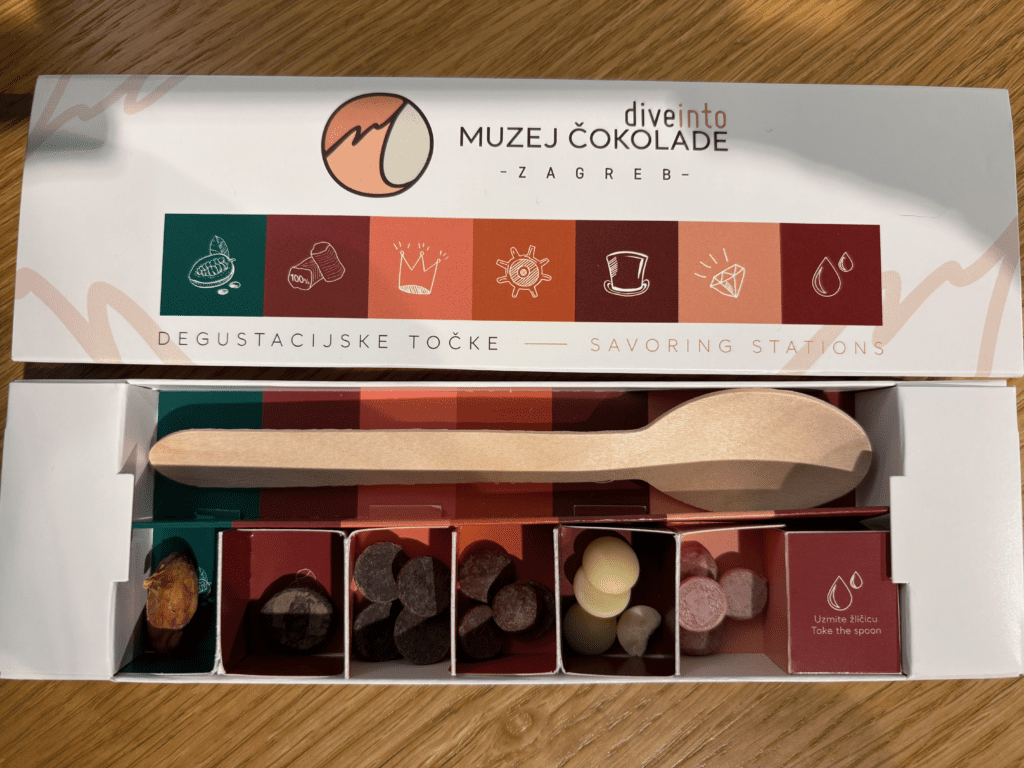
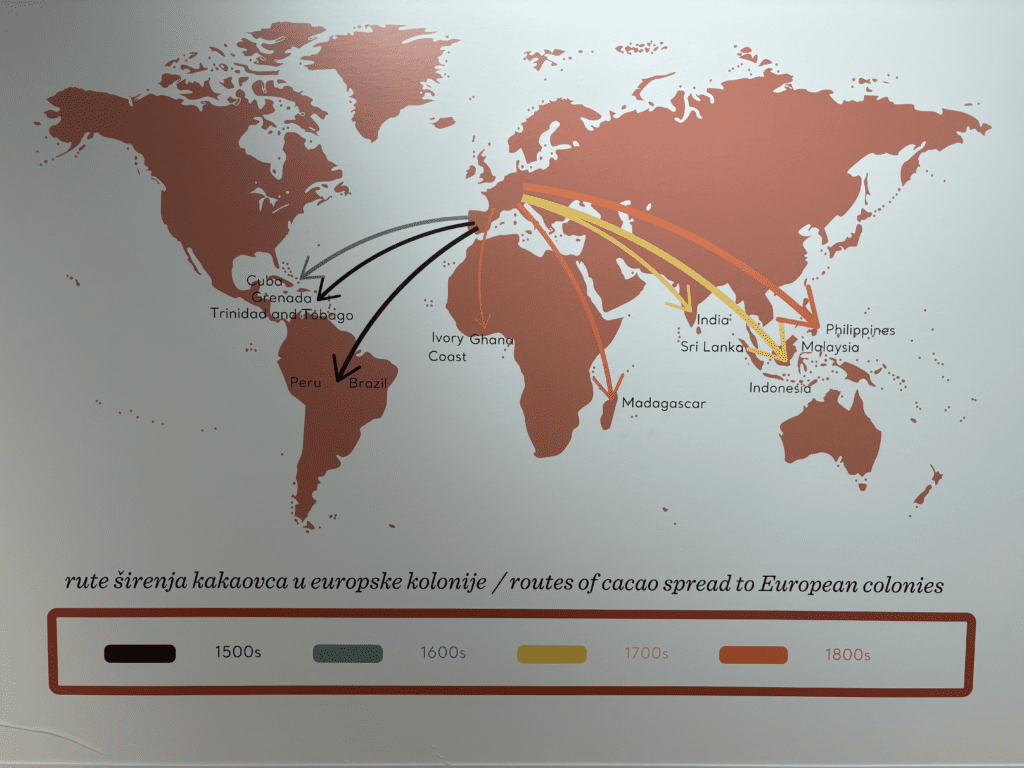
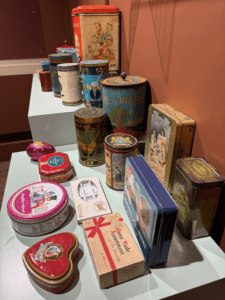
Another display explains how trading cards became fashionable to be included with certain brands. A display cabinet has original boxes and containers from chocolate companies. You also learn that trade has almost gone full circle – as the cocoa bean has again become an extremely valuable commodity. Lots of confectionery now contains a small percentage of cocoa. Some contain substitutes. You will be familiar with brands displaying the cocoa content on their packaging. In the last room there are some tasting taps and you use the spoon from your box to taste each one.
I spent over an hour here and also treated myself to some Croatian chocolate from the gift shop before leaving.
Do I recommend this museum ? Absolutely. This would be in my top 5 museums in Zagreb. I loved that it showed chocolate from such a different viewpoint than other museums I have been to. I also think that the signs, the layout of the rooms and the chocolate tasting – will appeal to people of all ages.
Croatian History Museum
This museum is close to the Lotrscak Tower and St. Marks Church. The attendant told me they had two exhibitions and if I wanted to see both she would give me a discount. I think this was the benefit of visiting at such a quiet time. I bought both tickets – €6 for the history i.e. permanent museum and €4 for a contemporary art display (which I presume changes periodically).
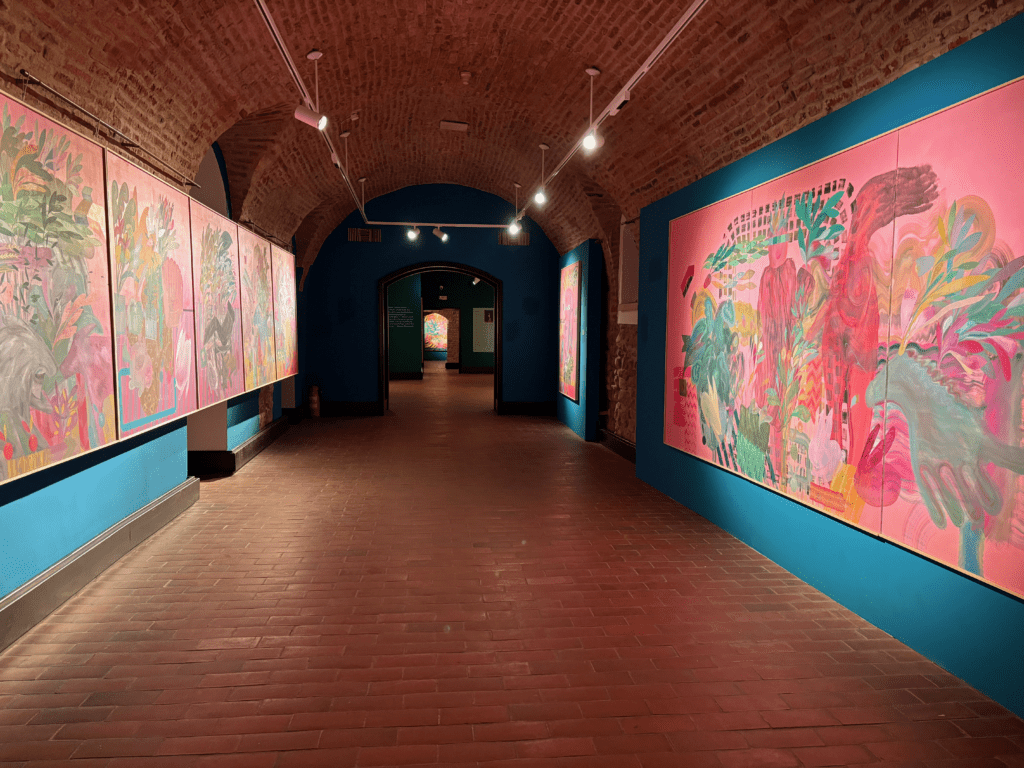
I went to the contemporary section, situated in the basement, first. The brickwork and the layout makes it a wonderful area to display art. The display was for Zozaru Simunovic, a Croatian artist. While I am not a huge lover of modern or contemporary art, I really enjoyed seeing this display.
Several neon signs displayed messages such as “Positivity, Optimism – makes you smile” and “For me art is above all play and pleasure`.
The art was colourful and there was also a section of digital art which had some atmospheric music playing.
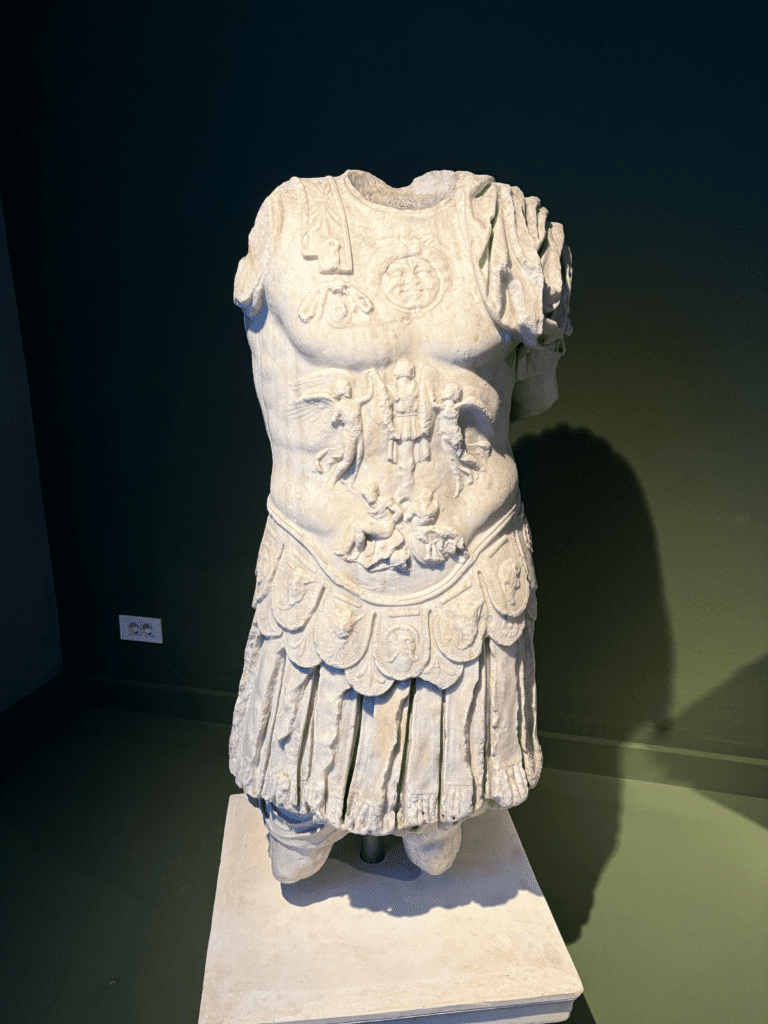
There was a small area which had a temporary exhibition which was on show for 4 months. It included exhibitions about the Roman Empire.
I then went to the permanent section of the museum. I was pleased that the signs were detailed and in English. It has 300,00 exhibitions divided into 17 collections. The main sections I enjoyed viewing were :
Bronze Section : This has the bust of St. Simeon which is extremely striking.
The History of Croatia : I loved learning about this and it was divided into lots of areas from 1500-1700.
Royalty : A display about King Tomislav and his coronation in 1938.
Cultural and Historical Exhibitions : This section showed Zagreb from 1925 and explained the importance of monarchy, politics, church and culture to the city.
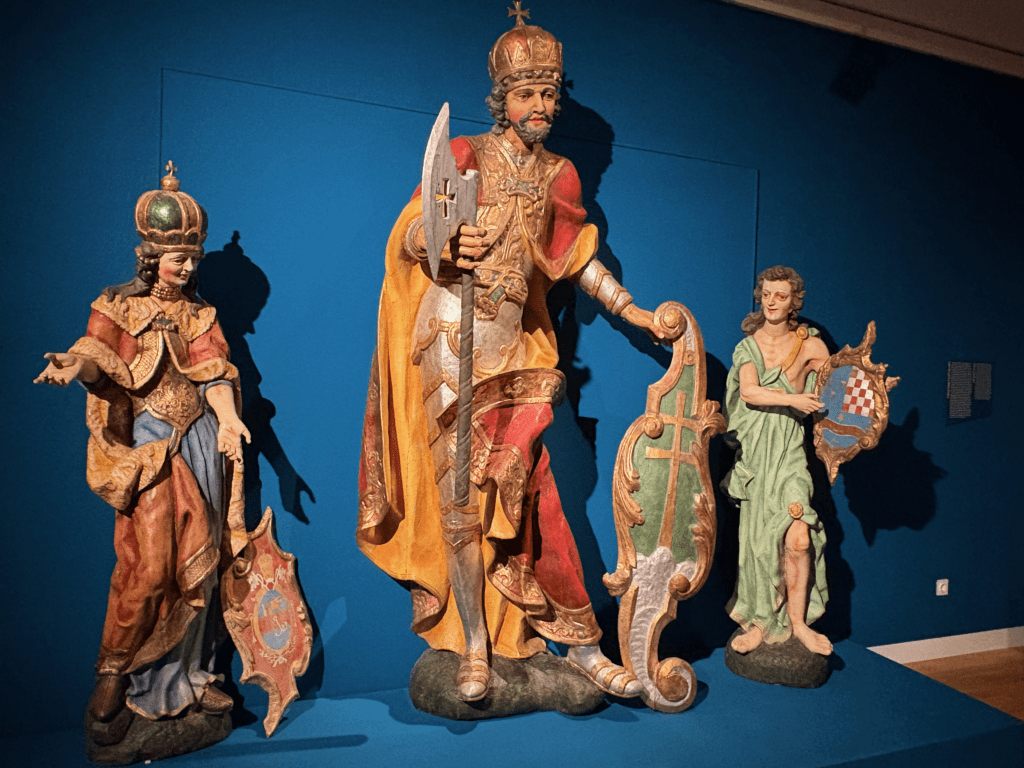
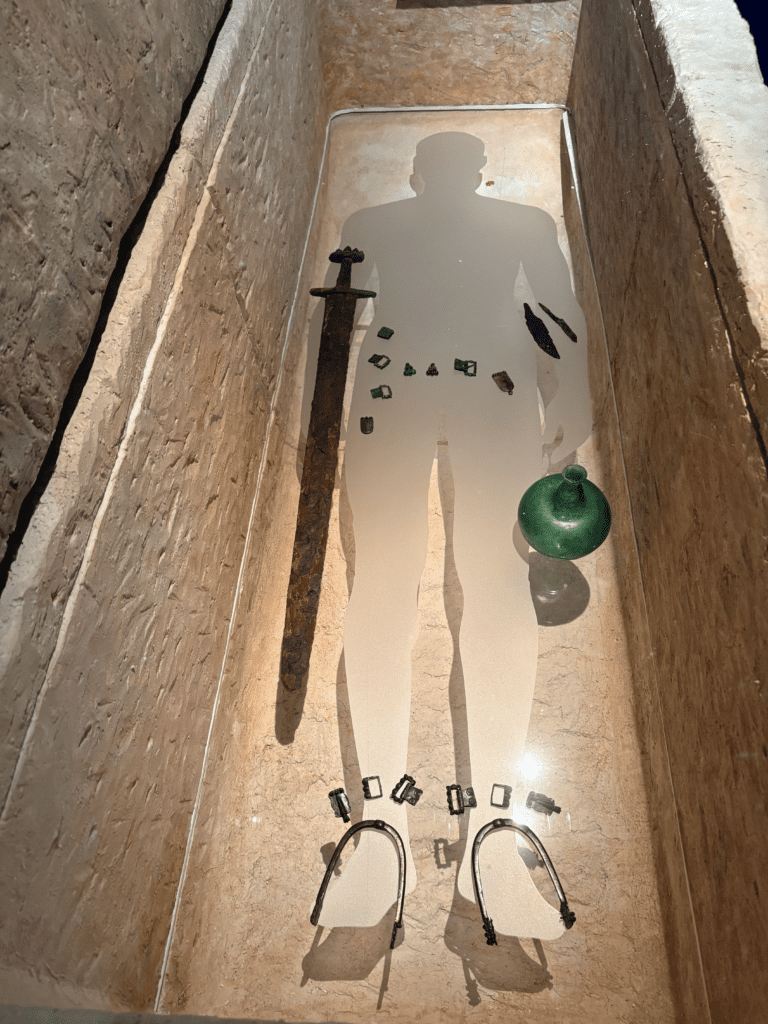
Do I recommend this museum ? If you are a history lover like me – absolutely. Also, this was one of the most “Croatian” museums I visited. While I love quirky museums, if it’s my first time in a country, I want to learn about it first.
Food, Drink, Cafes etc
As I outlined in my 24 hour itinerary, the cafe and restaurant culture in Zagreb is really excellent. If you are visiting for a short time you should try a Croatian restaurant and have the traditional Stukli (soft dough made from cheese, flour, milk and baked in the oven). But if you have more time, I highly recommend you try some of the restaurants on Tkalacia Street. This pedestrianised street is ideal to people watch and to enjoy a meal or a drink or two. I ate in the following:
“The Curry Bowl” a Sri Lankan restaurant (image 1 below)
“The Bombay Grill” an Indian restaurant (image 2 below)
and “BioMania Bistro” a Vegan restaurant (image 3 below, this is the vegan equivalent of a traditional Croatian dish of stuffed peppers).
All three have indoor and outdoor seating, are reasonably priced and my food was excellent.
I also had lunch in “Al Dente” an Italian, restaurant on Bogoviceva. My pizza was delicious (image 4 below) and the staff were all extremely friendly.


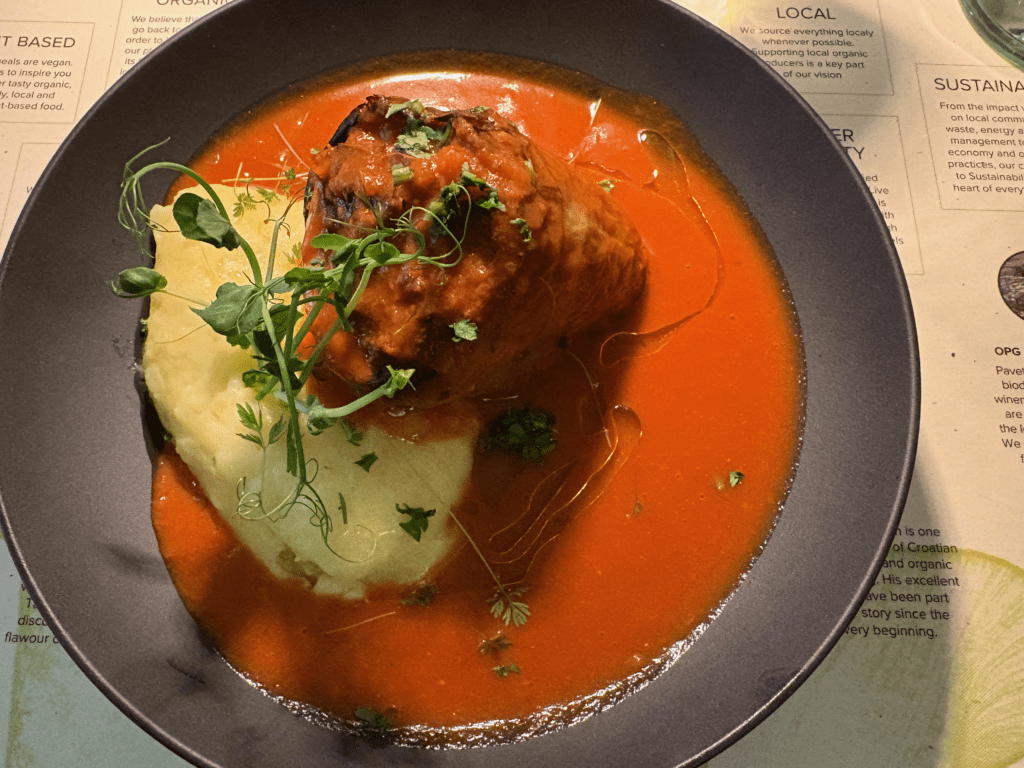

As I outlined in my itinerary for Zagreb (24 hrs), if you are not a smoker you do need to select where you want to sit carefully. They allow smoking in cafes and bars where they don’t serve food. A coffee costs €2-€3 and you can get a good glass of wine for €4.00.

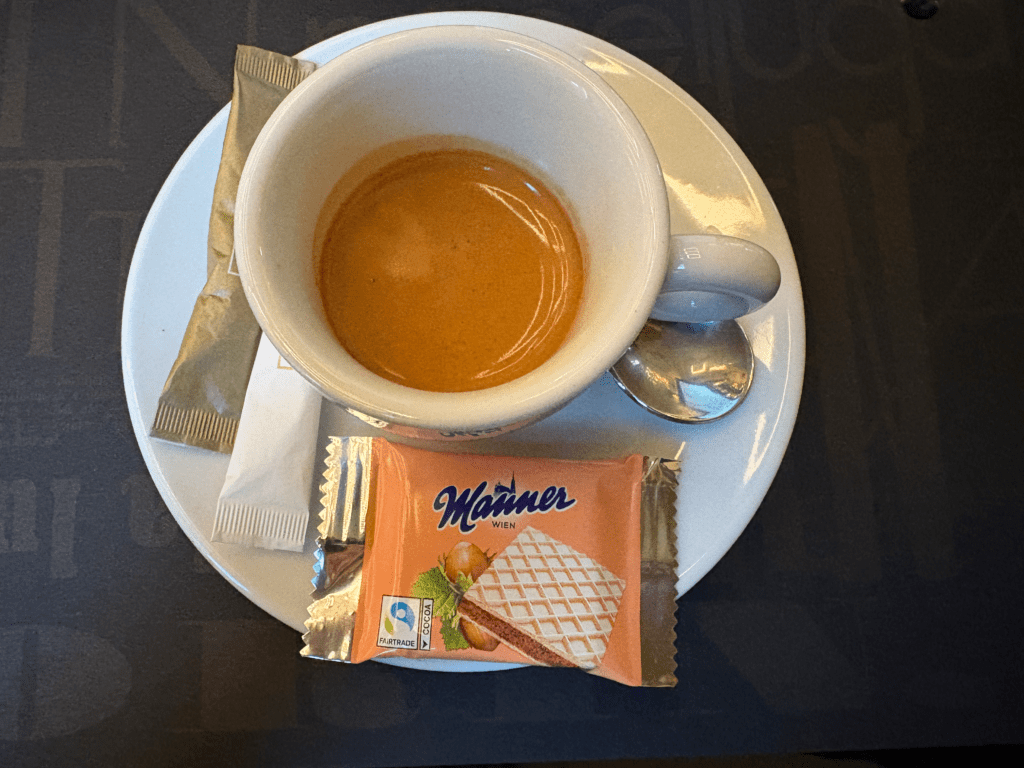
Lots of places I visited preferred cash. Tips were not mandatory but were appreciated for good service.
Final Thoughts
So between this post and my other two – I have shared lots of options with you.
In my opinion, the top 5 museums in Zagreb are as follows:
Zagreb City Museum (see 24 hr itinerary)
Museum of Lost Tales (see 24 hr itinerary)
Chocolate Museum
Lotrscak Tower
Croatian History Museum
Then if you have more time I would visit :
Tesla Museum
80’s Museum
Museum of Travel Experiences
I thoroughly enjoyed my first visit to Zagreb. I really want to see more of Croatia but I will return to Zagreb. I felt extremely safe, there is lots to do and your money goes far. These are great reasons to visit Croatia’s wonderful capital city !
2 thoughts on “How to spend more than 24 hrs in Zagreb, Croatia”
A lovely guide to Zagreb, a city we have yet to visit. We’d definitely want to visit the Tesla museum ( I’m am engineer!) and the chocolate museum. Thanks for a really useful post!
Mitch, Thank you very much for the lovely comment. You have made my weekend ! Kind Regards, Elizabeth